2027 details will be announced in December
DIVERSEartPB 2026
The Biennials and Art Institutions in the Contemporary Art Ecosystem
DIVERSEartPB 2026 is a living examination of how contemporary art circulates, interfaces, and evolves across a global ecosystem of biennials and art institutions. This year, we present seven international Biennials, including Gwangju Biennial (Korea), Cuenca Biennial (Ecuador), NYLAAT Triennial (New York), SACO Biennial (Chile), and NoMade Biennial along with other significant platforms and leading institutions, all positioned within a shared ecological frame.
Since its founding in 1895, the Venice Biennale has remained the most influential model. After World War II, biennials and triennials across cities like São Paulo, Istanbul, and Johannesburg expanded global representation, embracing social critique and experimental media while navigating tensions around inclusion, markets, and cultural diplomacy.
Biennials invite urgency, experimentation, and immediacy. They illuminate emergent practices, foster cross-disciplinary collaboration, and host field-wide dialogues beyond the walls of traditional museums.
Art institutions provide durable memory, methodological rigor, and sustained programming, ensuring innovations are archived, contextualized, and accessible to future generations. Together, they form a dynamic continuum: sparks of innovation followed by reflection, stewardship, and dissemination, keeping the field responsive to diverse publics.
In Latin America and other regions contending with rapid sociopolitical change, biennials are re-emerging as laboratories of critical thought. They read and rewrite the conflicts of our time, migration, memory, community, body sovereignty, and territory, while foregrounding sustainability and resilience.
This edition pays particular attention to place: how venues, geography, and local communities shape biennial and museum activities, and how those activities, in turn, shape place through curatorial interventions, community projects, and participatory formats. You may encounter AGUAS, and other works that foreground care, connection, and collective action as a mode of inquiry and transformation.
DIVERSEartPBis curated by: Marisa Caichiolo
CASABLANCA BIENNIAL 2026 (Morocco, Africa)
Project: AQUAS
Artist: Eugenia Vargas Pereira
Curator: Marisa Caichiolo
Booth: 707
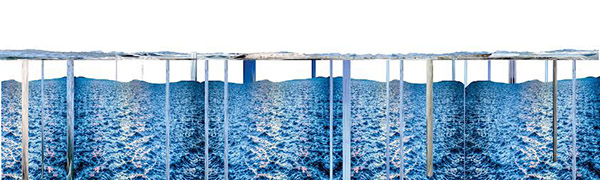
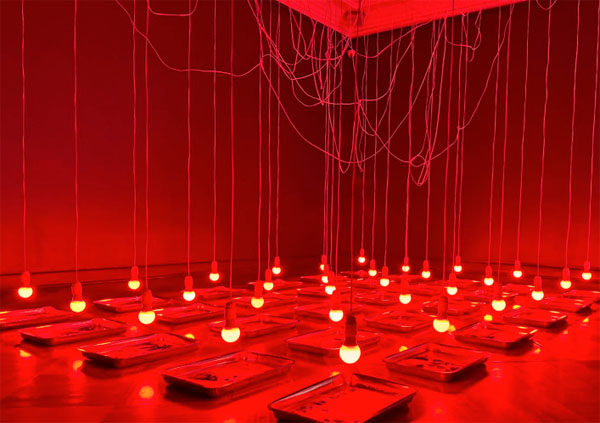
AGUAS is an ongoing exploration of rivers, inviting community participation through a ritual of river cleansing. For DIVERSEartPB, the artist presents AGUAS, centered on the river canals in Palm Beach. The installation simulates a large-scale analog darkroom, going beyond mere aesthetic expression.
The work consists of 55 developing trays, each illuminated by an amber or red light bulb suspended from the ceiling with white electrical cables. These cables emerge from a tangled mass overhead, forming an intricate network above the trays. Within each tray, a photograph of a woman or man interacting with the river is submerged in water. The installation evokes a space where images slowly emerge and fade – mirroring the tragic and relentless transformation of the natural world under the pressures of climate change and human neglect. Yet within this slow vanishing lies a quiet potential: a reminder that when we come together – with awareness, creativity, and care – we can interrupt the cycle and shape a more compassionate relationship with the Earth.
More than a visual experience, AGUAS becomes a space for contemplation. Community is the heart and soul of this project. AGUAS becomes not just a meditation on environmental degradation, but a collaborative act of care, listening, and restoration.
Eugenia Vargas Pereira has participated in numerous Biennials, including the Havana Biennial, Aperto X Venice Biennale, XX Biennial of Photography in Mexico City, Biennale Rotterdam, Casablanca Biennale, and the 50th Venice Biennale, among others.
PAJU CULTURAL FOUNDATION (PAJU, KOREA) & CULTURE NOMAD (SEOUL, KOREA)
Project: Birth Of Light
Artist: Sung Min Jang
Curator: Monica Hye Yeon Jun, In Collaboration With
International Association For Art Ecosystem Research (Iaae)
Booth: 705
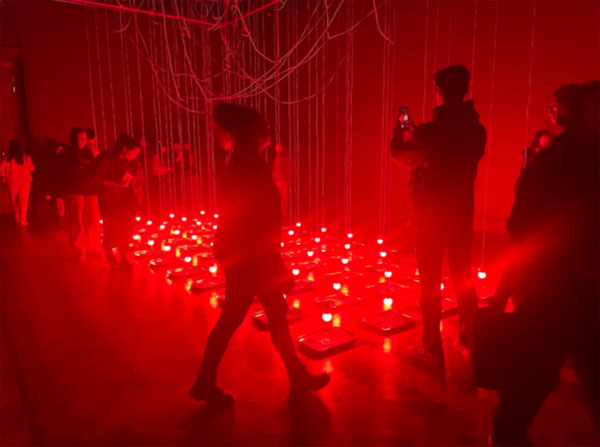
Birth of Light does not simply refer to the state of being alive – it marks the primordial moment when humanity first encounters the world, the threshold where consciousness meets existence. Through a cyclical rhythm of creation and dissolution, the work meditates on the recovery and reverence of life itself: the essence of being human, the sanctity of existence, and the sensibility that binds us to the living world.
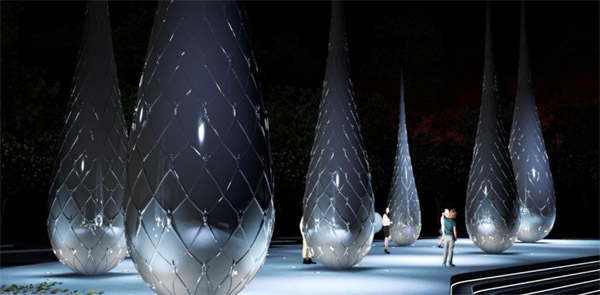
Composed of over a hundred suspended structures, the installation transforms the space into a breathing organism. From the ceiling, delicate forms made of hanji and internal frames cascade downward, filling the air with a subtle choreography of light and shadow. As illumination shifts and reflections intertwine, the work generates an organic rhythm – one that seems to pulse with life. Walking slowly through the installation, the viewer becomes immersed within what feels like the inner membrane of a living cell, surrounded by the quiet pulse of existence. The golden hue that permeates Birth of Light resonates across cultures as a symbol of divinity, vitality, and renewal. Here, light is not treated as a fixed form but as a living presence- breathing, reflecting, and responding. Each illuminated element converses with others, creating a field of mutual resonance. The viewer, moving within this ecosystem of light, is invited not merely to observe but to participate – to sense their own vitality mirrored in the luminous breath of the space. Ultimately, Birth of Light expands beyond the realm of an artwork. It becomes a living ecology where matter, energy, and perception converge – an ever-evolving symphony of connection that reawakens our collective memory of what it means to be alive.
*Paju Cultural Foundation is a public cultural institution based in Paju, a city shaped by its proximity to the DMZ – one of the most symbolically charged landscapes of the 20th century. Working at the intersection of place, memory, and contemporary practice, the Foundation develops site-responsive and research-driven art projects. It supports artists and curators through exhibitions, residencies, and public programs that engage local and global perspectives. Through active collaboration with international partners, the Foundation cultivates spaces for dialogue, reflection, and cultural exchange.Positioning art as a medium of connection and regeneration, the Foundation explores how culture can reimagine contested geographies and shared futures.
*The International Association for Art Ecosystem Research(IAAE) was established to examine and interconnect the relationships among artistic creation, space, institutions, regions, and society through the lens of an ecosystem. The Association understands art not as isolated works or singular events, but as a living structure in which humans and environments, memory and place, continuously interact. Through research, exhibitions, education, and international exchange, it bridges regionally grounded artistic practices with global critical discourse, seeking models for sustainable art ecosystems. The Association critically explores how art can contribute to social transformation and the formation of public value. Ultimately, the International Association for Art Ecosystem Research positions itself as an open research platform that restores relationships through art and fosters new ways of imagining the future.

WORLD TEXTILE ART BIENNIAL (MIAMI)
Project: Tempus Fugit
Textile Multi-Disciplinary Installation
Artist: Ixchel Suarez
Curator: Pilar Tobon
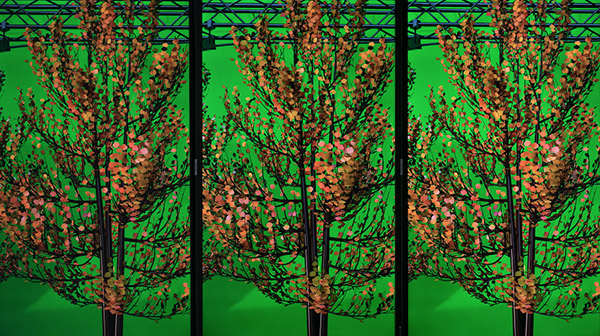
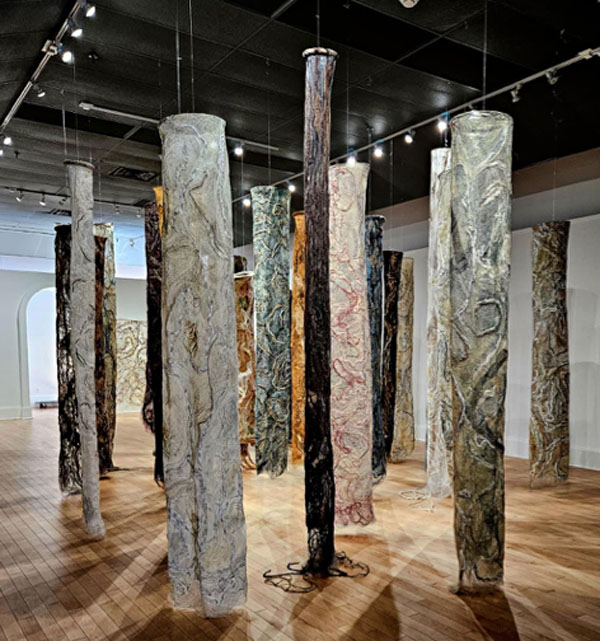
Tempus Fugit—Latin for time flies—is a contemplative, immersive textile installation composed of 35 tree-form embroidered contemporary light quilt-sculptures, accompanied by video by Esteban Powell and original music composed by Dimitar Pentchev (In Memoriam). Conceived as an environmental and poetic meditation, the work invites viewers into a suspended forest where fibre, light, sound, and moving image converge to embody the fragile passage of time.
Each quilt-sculpture stands as a living witness: layered, stitched, and illuminated surfaces evoke growth rings, scars, and renewals—records of lived time embedded in cloth. Hand embroidery becomes an act of remembrance and resistance, slowing the viewer’s gaze in a world driven by speed and impermanence. The tree forms echo humanity’s enduring relationship with nature, suggesting resilience while acknowledging vulnerability, loss, and decay.
Projected imagery moves gently through the installation like breath or memory, expanding the textile landscape beyond the physical into a temporal realm. Sound, composed in memoriam, carries a quiet elegiac presence—at once intimate and universal—guiding the body through space while marking absence, transition, and continuity. Together, video and music do not illustrate the textiles; they converse with them, weaving an atmosphere where silence, vibration, and light become material.
Tempus Fugit is both elegy and offering. It speaks to collective histories, ecological precarity, and the human need to mark time through making. Rooted in traditional textile language yet fully contemporary, the installation affirms fibre as a living archive—where art holds time, and time, fleeting as it is, briefly becomes tangible.
SELECTED INTERNATIONAL BIENNIALS BY MARISA CAICHIOLO N NEW YORK LATIN AMERICAN TRIENNIAL – NYLAAT (NEW YORK, USA)
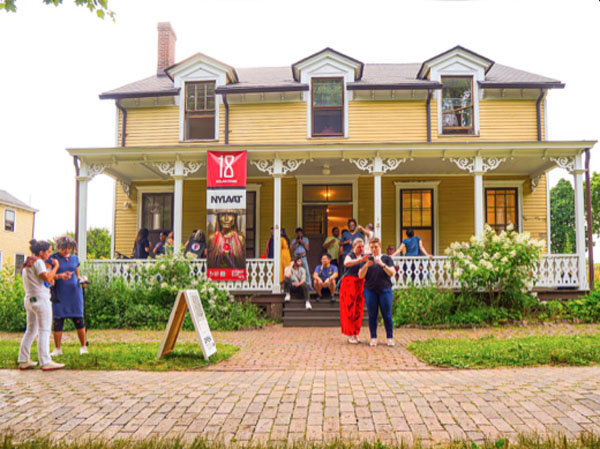
The New York Latin American Art Triennial (NYLAAT) has established itself as one of the most active institutional platforms dedicated to the promotion, research, and dissemination of Latin American art in the United States. With an internationally oriented curatorial model and a network of venues across New York City, the Triennial advances initiatives that strengthen Latin America’s cultural presence in one of the world’s most influential artistic capitals.
Its programming encompasses large-scale exhibitions, artist residencies, educational projects, specialized publications, and ongoing collaborations with museums, universities, and cultural organizations. These efforts foster a transnational dialogue that connects artists from Latin America and its diaspora with global audiences, expanding opportunities for recognition and visibility within the international art circuit.
More than a periodic event, NYLAAT functions as a dynamic institution that researches, supports, and amplifies diverse contemporary practices. Its mission is to create spaces of recognition for the multiple voices of Latin American art, promote new critical perspectives, and contribute meaningfully to the strengthening of Latin America’s presence within the global cultural landscape.
CUENCA BIENNIAL (ECUADOR) – 40-YEAR ANNIVERSARY
The Game: Biennial of Biennials
The documentary addressing the XVII Cuenca Biennial unfolds as a visual research tool that, through the lens of play, explores the dynamics that influence the artistic and curatorial creation of this edition. Here, the camera acts as an epistemological resource that offers the opportunity to observe the phases of creation, their tensions and methodologies, unveiling the procedural aspect of each proposal and its staging.
Play, seen as a mental strategy, an experimental environment, and a flexible structure of meaning, becomes the core for analyzing the practices of the artists and curators involved. Each proposal is considered from an angle that highlights its internal logic, its systems of rules, its trial-and-error methods, and the shaping of alternative worlds. Likewise, the film investigates the curatorial role as an act of translation, negotiation of ideas, and mediation that organizes meanings within the exhibition space.
Through a meticulous approach, the visual record emphasizes the connections among curators, artists, works, conflicts, and staging; the critical actions that support each work; and the reflective processes that shape each exhibition. Thus, the film, in addition to capturing the process of installing the XVII Biennial, generates knowledge about it, positioning play as a category of analysis and a practice that shapes the artistic and curatorial dynamics of contemporary art.
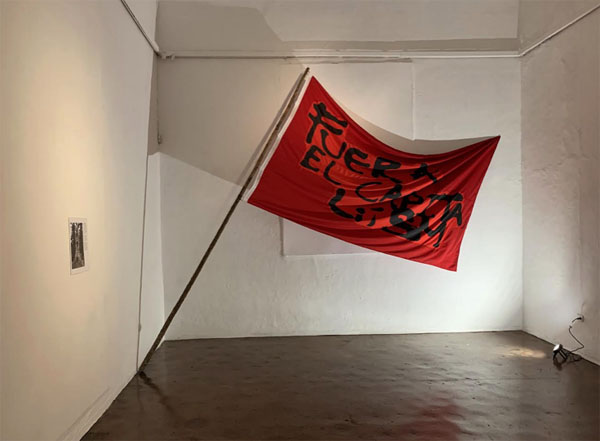
NOMADE BIENNIAL
Nomade Biennial is a project created by the critic and curator Hernán Pacurucu from Ecuador and the visual artist and independent Chilean curator Víctor Hugo Bravo, from 2015 to the present. It is a space in transit, a multiple collectivity that, from autonomous and independent production, generates a series of reflections on the systems and visibility of contemporary art. A collectivity in transit generating thought, addressing border or institutional exhibition spaces, conducting workshops, publications of books, conferences, mobile residences, settlements, and multiple interdisciplinary alliances as a platform, a biosphere of autonomous economy, which articulates other forms of human relationship rooted in utopias, experiments, mistakes, and reflections in relation to the context.
Articulating a political and emotional view of the new forms of social gathering, fundamentally anchored in collaborative work and affects. Creating multiple networks that generate work nodes, enabling spaces and bringing people together under a common ideological umbrella. Cultivating from artistic creation possible scenarios of communication and coexistence that shape society. Nomade configures new ways of understanding the biennial format, developing a series of deconstructive strategies.
SACO BIENNIAL (CHILE)
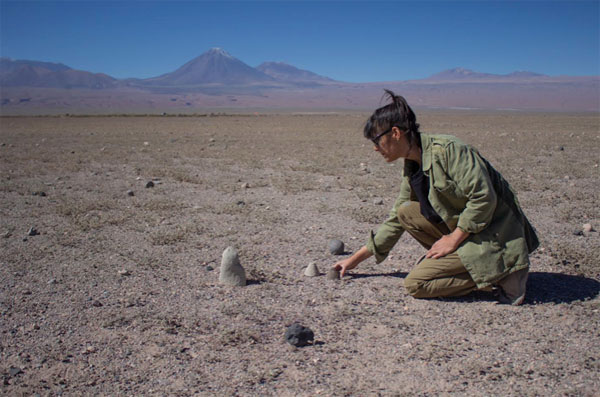
SACO Corporation is a nonprofit cultural organization that positions itself internationally due to the impact of its management and its quantitative and qualitative results in the major copper and lithium mining capital. Its work has expanded the visual arts in Latin America through exhibitions, research at the intersection of art and science, educational programs, interventions in natural spaces, and artistic residencies in the world’s driest desert.
Since 2012 it has developed the SACO Contemporary Art Biennial. Each edition is carried out under a different curatorial concept and is distinguished by its “museum without a museum” program, which transforms places not necessarily tied to culture into spaces where the community encounters art. Following the exhibitions, the artwork materials are reused, under a pioneering circular economy logic in the international biennale ecosystem. In addition to exhibitions, SACO organizes residencies, in which artists from around the world can approach the planet’s clearest skies, engage with the indigenous cultures of the region, and connect with leading scientists in fields related to the Atacama Desert, such as geology, microbiology, astronomy, among others.
The corporation’s mission is to establish a permanent center of reflection and dialogue through the artwork, addressing the absence of institutions dedicated to pursuing these aims in the Antofagasta region. All its educational activities come together in its permanent education program, a school without a school. To date, the Corporation’s activities have been carried out in Chile, Argentina, Mexico, Colombia, Brazil, Germany, Ecuador, Spain, Switzerland, Poland, and Norway.
WORLD TEXTILE ART BIENNIAL (MIAMI)
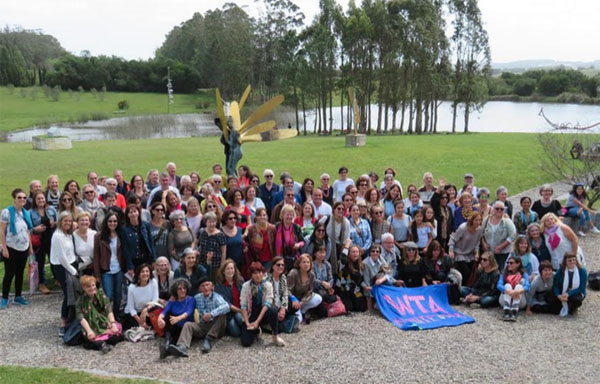
The WTA Organization was founded in 1997 in the city of Miami, Florida, United States, under the name Women in Textile Art. Pilar Tobón, a curator and Colombian textile artist, posed this great challenge given the need to reclaim textile art at local and global levels. Tobón has always pursued the objectives of supporting, disseminating, promoting, and fostering textile artists and their works.
In 2009, given the inclusive and universal character of textile art, the name was changed to World Textile Art. The World Textile Art Biennial has been held since 2000. It has taken place in the United States (2 editions), Venezuela, Costa Rica, Argentina, Mexico, Uruguay, Spain, and Chile.
To meet the outlined objectives, the director created the WTA Contemporary Textile Art Biennial, nomadic in nature, unique in its kind in the world. This first version was held in 2000 at the Museum of Latin American Art of Florida. With the Biennial, local cultural practices and the natural and human diversity of the host country are promoted and disseminated to visitors from around the world who attend the great textile gathering.
GWANGJU BIENNIAL (KOREA)
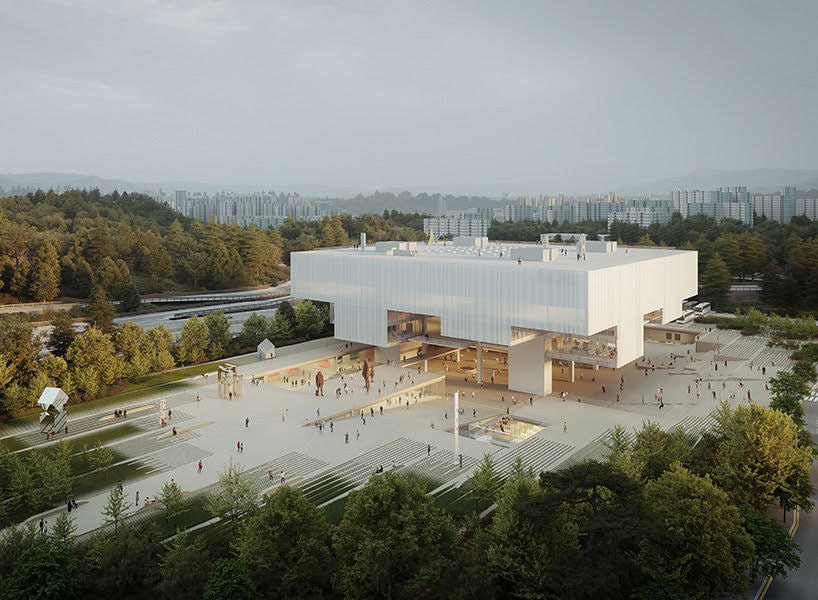
The Gwangju Biennale is an international contemporary art event founded in South Korea in 1995, established in memory of the 1980 Gwangju Democratization Movement. It is one of Asia’s oldest and most prestigious biennials, held every two years, and features exhibitions, performances, and educational programs from around the world. Hosted by the Gwangju Biennale Foundation and the city of Gwangju, it serves as a platform for cultural exchange and discourse, with a mission to promote art, cultural history, and the city itself.
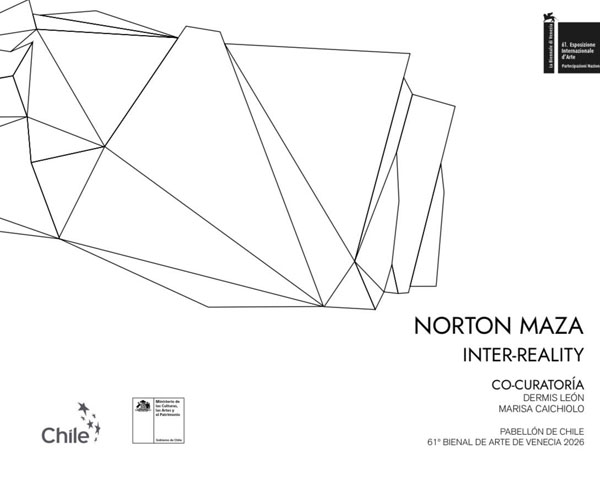
61ST VENICE BIENNALE 2026
OFFICIAL PAVILION OF CHILE AT THE ARSENALE
Co-curated by: Marisa Caichiolo & Dermis León
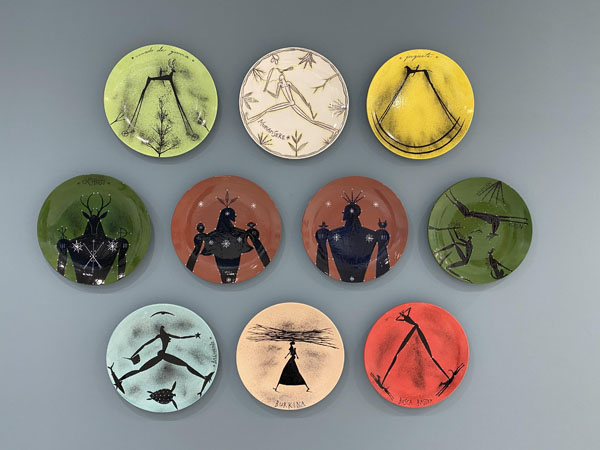
Inter-Reality, by artist Norton Maza, curated by Marisa Cachiolo and Dermis León and managed by Claudia Pertuzé, also as part of the team Beatrice Di Girolamo and architect Mathias Klotz, was selected to represent Chile at the 61st Venice Art Biennale, an event to be held from May 9 to November 22, 2026, in the Italian city. Chile’s participation in the Venice Biennale is the result of inter-institutional collaboration between the Ministry of Cultures, Arts and Heritage, through its Secretariat of Visual Arts, the Ministry of Foreign Affairs, through the Division of Cultures, Arts, Heritage and Public Diplomacy (DIRAC), and the Embassy of Chile in Italy.